TL;DR: I’m sharing why I chose the structured reflections of an office building over a busy mall scene and how practising with Darktable and Affinity is helping me find my own creative rhythm.
Finding Comfort in Architectural Lines
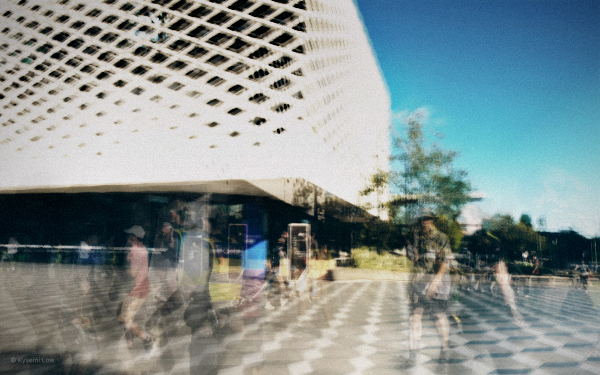
When I’m out shooting, I usually can’t see the fine details on my camera’s small screen—especially in the bright daylight. Because of that, I’ve learned to take plenty of backup shots. I went into this session wanting to capture the busy energy outside the mall with multiple exposures and people moving through the frame. But I also made sure to capture a nearby office building, just in case my first idea didn’t pan out.
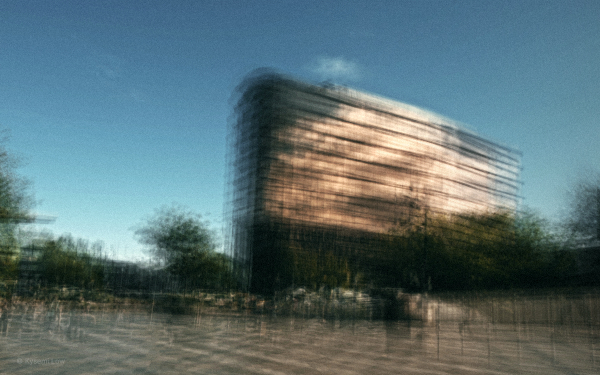
I was drawn to the building’s curved structure, the repetitive window lines, and the way the glass caught the reflections of the sky. At the time, it was my “safety net,” but it ended up becoming the focal point of my entire week.
Learning the Language of Layers
The real work started once I got home and loaded everything onto my laptop. I’m self-taught, so navigating photography software often feels like a slow climb. Lately, I’ve been alternating between three free programs that are finally starting to feel familiar.
I start with X Raw Studio (a Fujifilm-specific tool) to set the base look. From there, I move to Darktable, which is a powerful program for basic developing—think of it as a free alternative to Lightroom. Finally, I head into Affinity, which is where I handle the more complex “Photoshop-style” work like stacking and blending layers.
After hours of practice and trial and error, the steps are finally starting to stick. I noticed a sense of quiet pride when I found the filters and adjustment tools I needed without having to stop and look up a tutorial. It felt like a huge personal victory. By the time I was finished, the building image had thirteen different layers of adjustments—each one a small decision that brought the vision closer to life.
Choosing the Best Path
I spent hours editing several different sets of images. One version—the scene outside the mall with people walking—also had thirteen layers of work put into it. But when I sat them side-by-side to compare, the mall scene just felt imbalanced. There were too many clashing colours competing for attention.
I had a clear idea of what I was looking for, and the building felt more like “me.” It was orderly and intentional, so it was the one that stayed. Finishing such a heavy edit brought a massive sense of relief. It was a lot of mental lifting, and it reminded me that I don’t need to push quite this hard every single week.
Trusting the Process
Every hour spent practising is a step forward, even if the final result isn’t what you first imagined. Comparing my two different versions this week helped me see my own progress and gave me the confidence to choose the work that felt right. Sometimes, the best way to move forward is to stop looking for the “right” answer and simply trust your own eyes.
With love & gratitude,

Thanks for being here. Simply Kysemi is a space where I’m practising a slower, more intentional pace. To keep things calm, I check my messages and comments only when I have the time. I truly appreciate your thoughts and will get back to you as soon as my schedule allows.